


Off Gas Detector For Li-ion Battery Room
All in One Solution and Installation Service for Detection
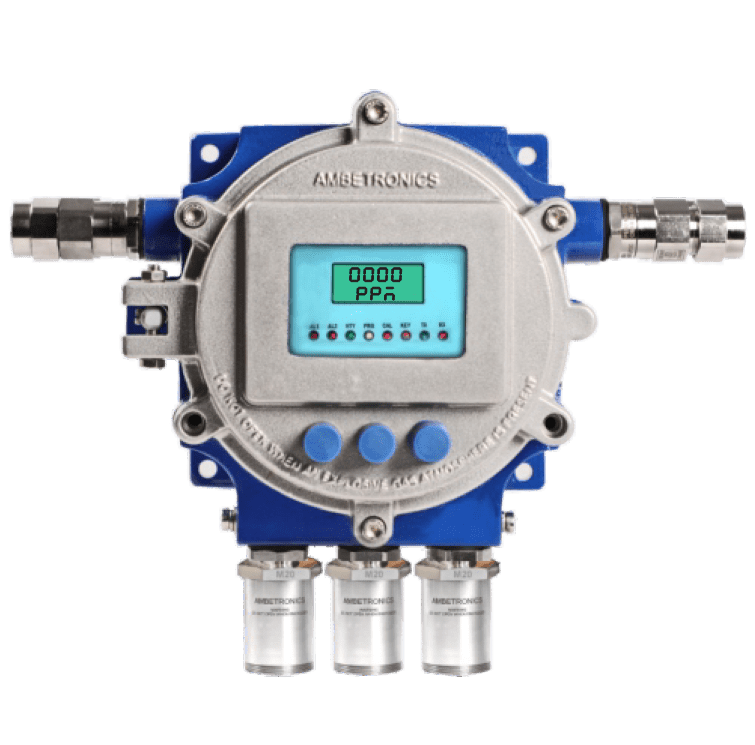
In every modern battery room, safety is a top priority. Whether used in renewable energy systems, data centers, or EV charging infrastructure, lithium-ion batteries can release dangerous gases during overcharging or malfunction. This makes off-gas detection essential for preventing fires and ensuring worker safety. Ambetronics Engineers Pvt. Ltd. introduces the GT-6022-FLP Smart Multi-Gas Detector from the Deca Safe Series, an advanced solution designed to protect your battery room from potential hazards.
Why Gas Detection Is Crucial in a Battery Room
During thermal runaway or cell failure, lithium-ion batteries emit flammable and toxic gases such as hydrogen (H₂), carbon monoxide (CO), carbon dioxide (CO₂), and volatile organic compounds (VOCs). These gases can ignite or cause suffocation if undetected.
Installing a reliable battery room gas detector provides an early warning before smoke or fire appears. This early detection allows operators to take corrective action—ventilate the room, isolate power sources, or trigger alarms—protecting people and property.

NFPA Guidelines for Battery Room Safety

ESS installation standards

Explosion prevention systems
Product Highlight
| Features | Description |
|---|---|
| Multi-Sensor Technology | Detects toxic, combustible, and VOC gases. |
| Smart Sensor Module | Stores calibration and alarm data. |
| MODBUS RTU | Seamless integration with BMS or SCADA. |
| Flameproof IP66 Housing | Rugged LM-6 aluminum design for harsh environments. |
FAQ's
What is the purpose of gas detection in a battery room?
Gas detection in a battery room helps identify the release of flammable and toxic gases such as hydrogen (H₂), carbon monoxide (CO), and volatile organic compounds (VOCs) that occur during battery charging or failure. Early detection prevents explosions, fires, and health hazards.
Why is off-gas detection important for lithium-ion batteries?
Off-gas detection provides the earliest warning of potential thermal runaway in lithium-ion batteries. When a battery cell starts to fail, gases are released before smoke or fire appears. Detecting these gases early allows quick preventive action to avoid major incidents.
Which standards apply to gas detection in battery rooms?
According to NFPA 855 and NFPA 69, battery energy storage systems must have continuous gas monitoring to detect flammable gases and prevent explosions. Ambetronics detectors are designed to meet these safety and compliance standards.
How does the GT-6022-FLP integrate with existing systems?
It supports RS-485 communication with MODBUS RTU protocol, allowing easy integration with BMS, PLC, and SCADA systems for centralized monitoring and control.
Where can the GT-6022-FLP be installed apart from battery rooms?
It can be used in energy storage systems (ESS), refineries, paint shops, power plants, cold storages, and chemical processing plants, wherever gas detection and safety monitoring are required.